Overview
Baixar
Modo Foco
Tamanho da Fonte
Tencent Cloud Edge Functions provides a serverless code execution environment for the edge nodes of Tencent Cloud EdgeOne. This way, you can focus on writing business function code and configuring triggering rules, without the need to configure or manage infrastructure such as servers. The written code can be elastically and securely executed on the edge nodes that are closest to users.
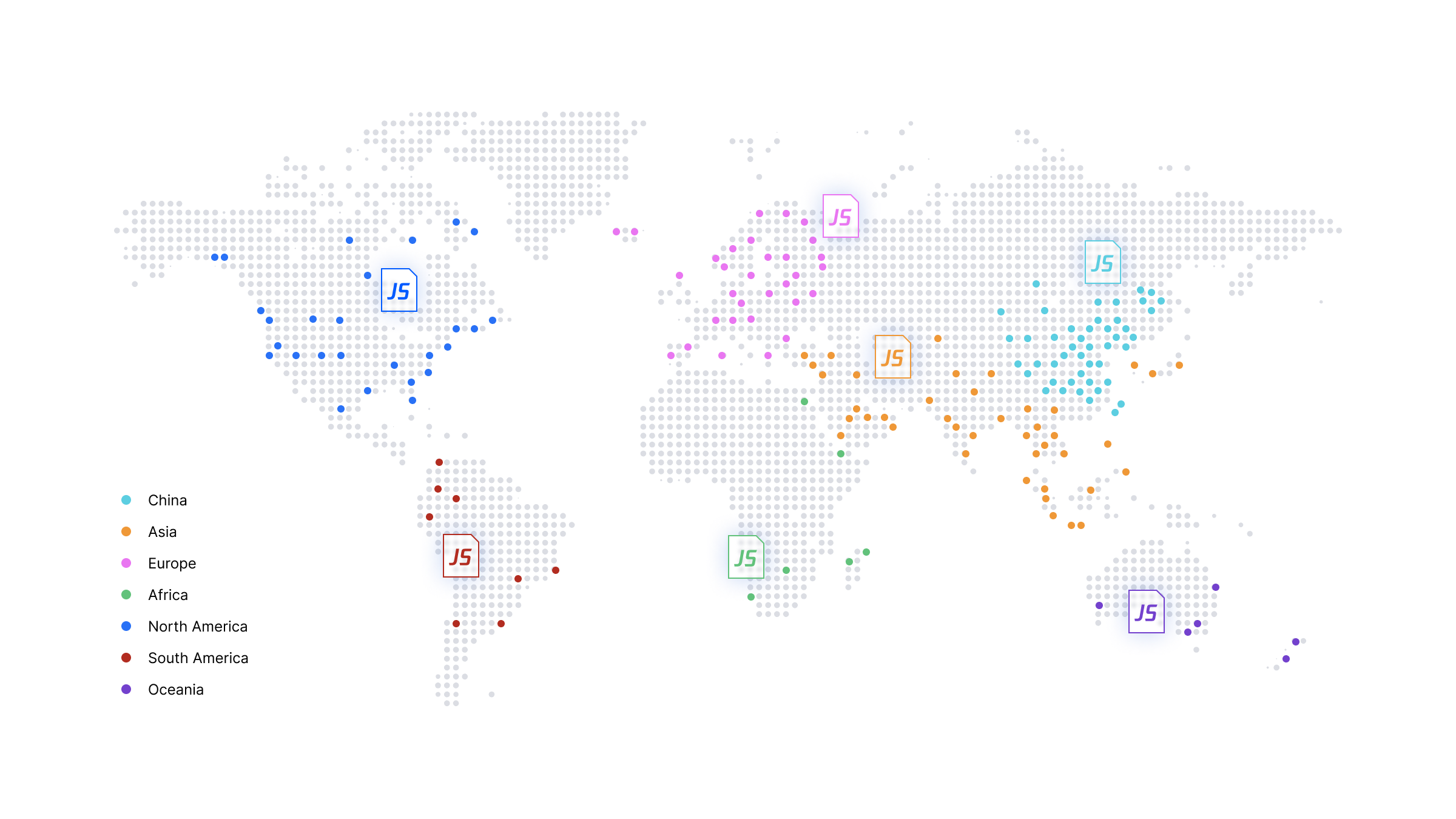
How It Works
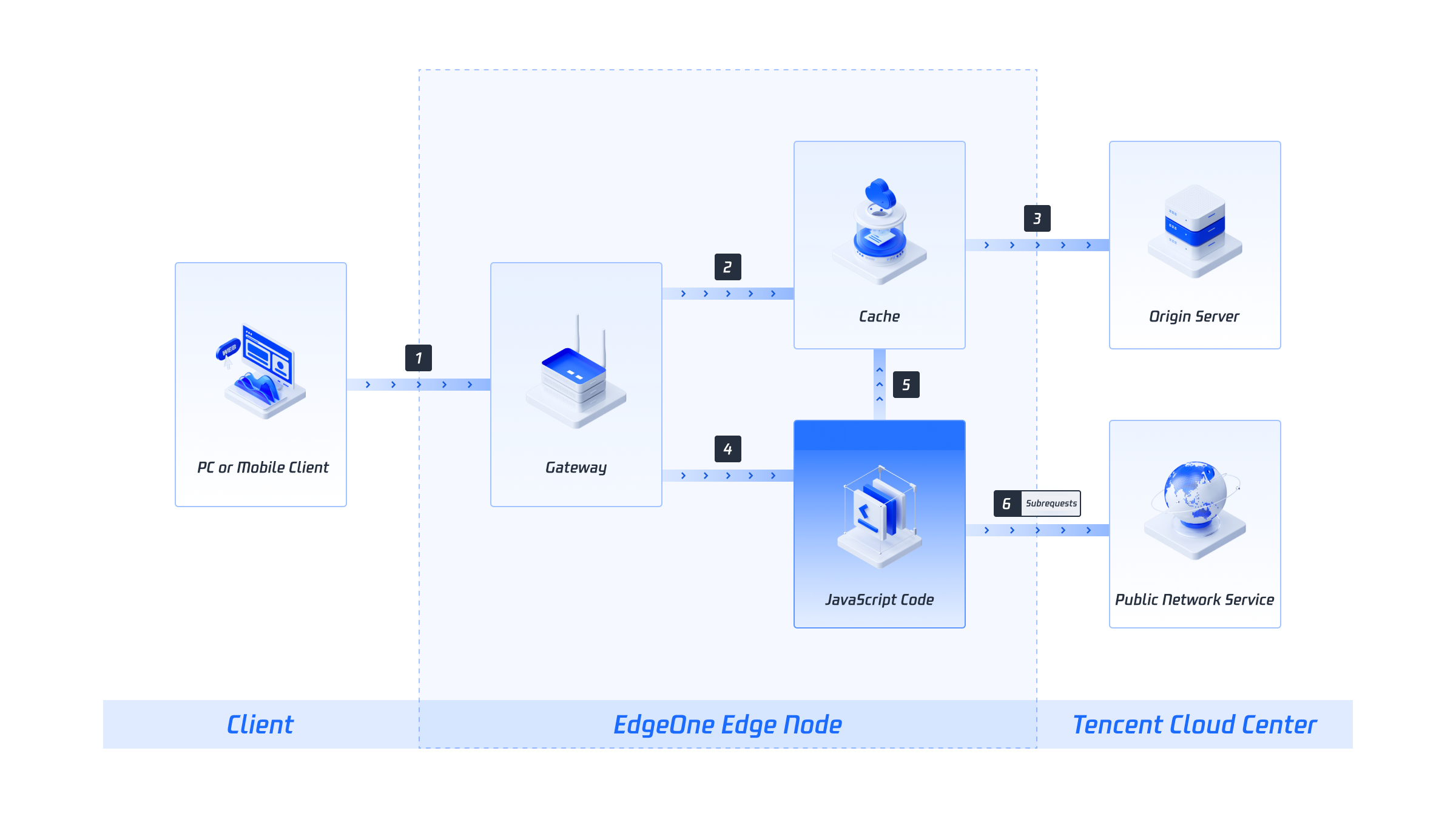
You can develop JavaScript functions and deploy them to the edge nodes of Tencent Cloud EdgeOne.
1. If a client request does not hit the configured function triggering rule, the request is handled in the following process:
(1) The client request is sent to the gateway of an edge node of Tencent Cloud EdgeOne. > (2) The cache of the node responds if the requested content already exists in the cache. > (3) The origin server responds if the requested content does not exist in the cache.2. If a client request hits the configured function triggering rule, the request is handled in one of the following processes:
(1) The client request is sent to the gateway of an edge node of Tencent Cloud EdgeOne. > (4) Edge Functions receives and executes the JavaScript code. > (5) Subrequests access the cache. > (3) The origin server responds if the requested content does not exist in the cache. (1) The client request is sent to the gateway of an edge node of Tencent Cloud EdgeOne. > (4) Edge Functions receives and executes the JavaScript code. > (6) Subrequests access the public network service.Benefits
Distributed Deployment
Tencent Cloud EdgeOne supports more than 3,200 edge nodes. Edge Functions is deployed on edge nodes in distributed mode.
Ultra-low Latency
Client requests are automatically scheduled to the edge nodes that are closest to users. If triggering rules are hit, edge functions are triggered to process the requests and return results to the client. This helps significantly reduce the client access latency.
Elastic Scaling
Edge Functions schedules requests to edge nodes that are allocated sufficient computing resources based on the proximity of the user when spikes occur in client requests.
Serverless Architecture
The serverless architecture of Edge Functions eliminates the need to focus on the maintenance of the memory, CPU, and network of servers and other infrastructure resources. You can focus on the development of business code.
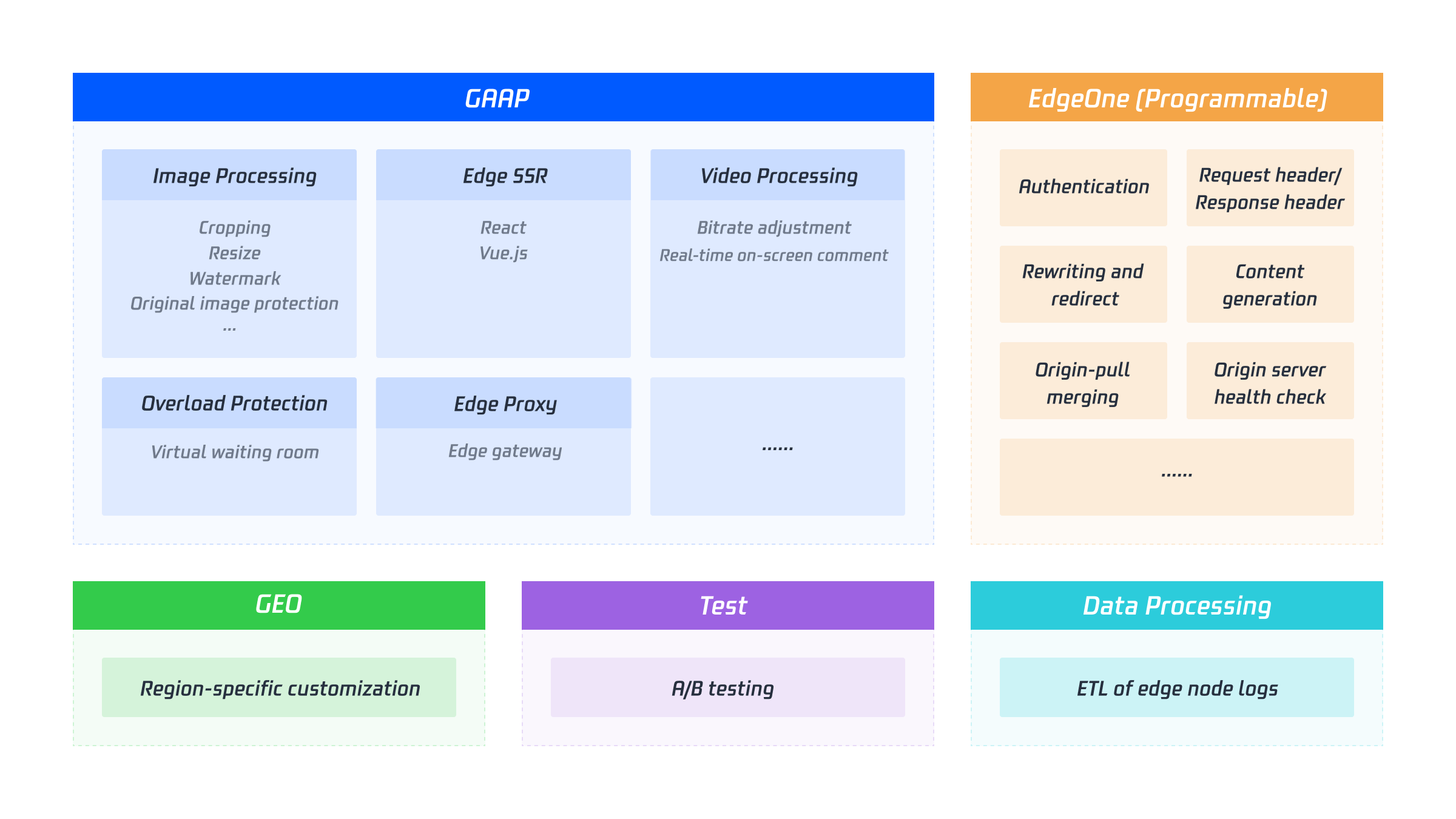
Use Cases
Use Limits
Content | Limit | Note |
Number of Functions per Site | 100 functions | A single site supports up to 100 edge functions. |
Number of Trigger Rules per Site | 200 rules | A single site supports up to 200 trigger rules for functions. |
Function Name Length | 30 characters | 2 to 30 characters, up to 30 characters. |
Code Package Size | 5 MB | The maximum size for a single function code package is 5 MB. |
Request Body Size | 1 MB | Client requests can carry a body up to 1 MB. |
CPU Time | 200 ms | CPU time slice allocated for single function execution, excluding I/O waiting time. |
Running memory | 128 MB | The maximum runtime memory available to a single function execution environment, including code, variables, and data buffers. The memory of each execution environment is fully isolated. If the memory size exceeds 128 MB, the system will try its best to ensure the current request completes normally. However, under extreme load scenarios, requests that exceed the limit may be reclaimed prematurely. |
Development Language | JavaScript | Currently, only JavaScript is supported. |
Number of console calls | 20 times | A maximum of 20 console method calls are allowed within a single function. After 20 calls are exceeded, the printing operation will no longer be executed. |
Number of Loop Iterations | 100,000 times | In the function, the for, for in, for of, while, do while loops are limited to execute no more than 100,000 times. |
Ajuda e Suporte
Esta página foi útil?
Você também pode entrar em contato com a Equipe de vendas ou Enviar um tíquete em caso de ajuda.
comentários