Billing Overview
다운로드
포커스 모드
폰트 크기
TDMQ for Apache Pulsar provides two flexible billing modes: yearly/monthly subscription and pay-as-you-go. The billing rules and applicable scenarios of different billing modes vary. You can choose the optimal billing solution based on your business scale, usage period, and cost budget to achieve the best balance between resource utilization and cost-effectiveness.
Product Series
TDMQ for Apache Pulsar provides two product series: pro clusters and virtual clusters, to meet the needs of different business scenarios.
Product Series | Storage Form | Sales Status |
Pro cluster | Fixed storage and elastic storage. | Commercialized. Require payment for use. |
Virtual cluster | Fixed storage | Discontinued. |
For specific differences, use cases, and selection recommendations of products in different forms, see Product Selection.
Billing Modes
TDMQ for Apache Pulsar supports two billing modes: yearly/monthly subscription (prepaid) and pay-as-you-go (postpaid). The differences between the billing modes are as follows:
Billing Mode | Yearly/Monthly Subscription (Prepaid) | Pay-as-You-Go (Postpaid) |
Billing instruction | Select specified specifications and prepay for a certain period before you can use the resources. | Select specified specifications to create a cluster and pay after using the resources. |
Billing cycle | Billed based on the purchased duration of the order. | Billed by the hour, with daily deductions. Usage less than one hour is rounded up to one hour. |
Scenarios | Suitable for scenarios with stable business scale and long-term usage, offering discounted pricing to help reduce long-term costs. | Suitable for short-term scenarios such as testing or uncertain traffic peaks, billed based on actual usage to avoid idle resource wastage. |
Billing mode change | Not supported. | Not supported. |
Supported cluster type | Pro clusters (fixed storage) and pro clusters (elastic storage). | Virtual clusters. |
Billable Items
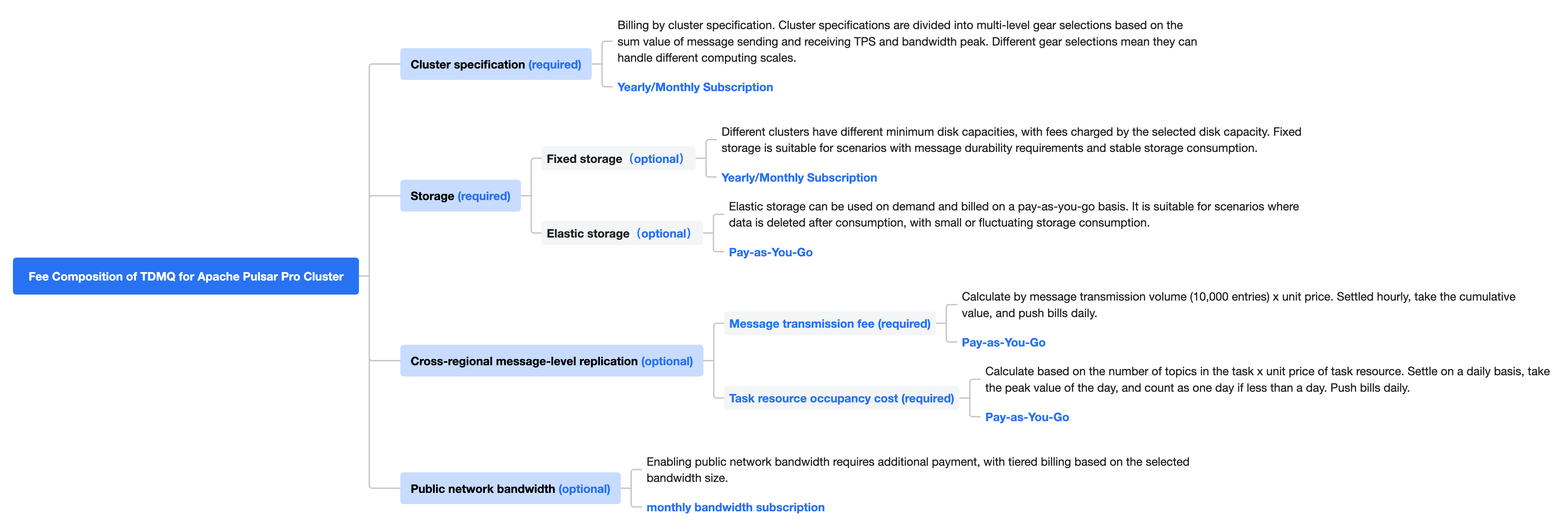
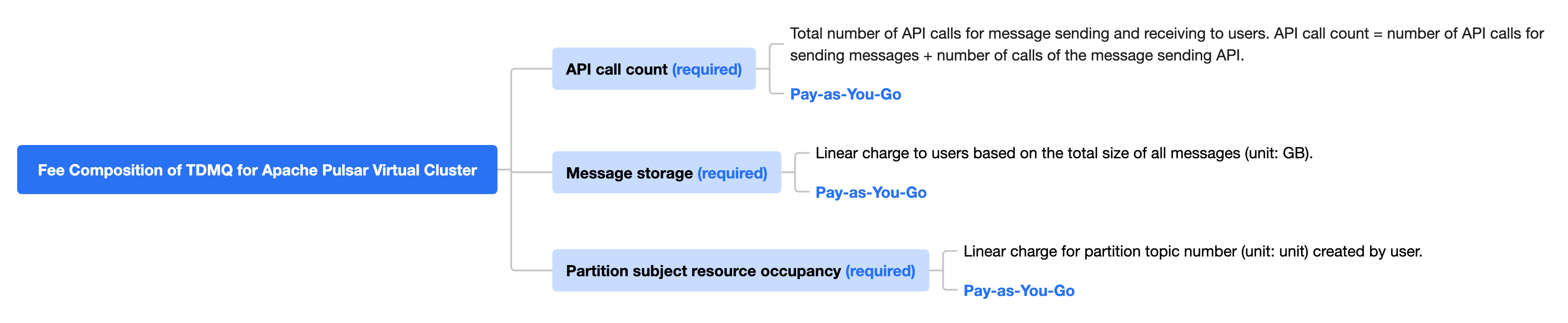
Billable items vary across different cluster types in TDMQ for Apache Pulsar. The following figures demonstrate the specific billable items.
Pro Clusters
Virtual Clusters
피드백